
Preparing for your appointment
Joint treatment: 7 questions for your medical appointment
When joint treatment is being considered, some questions may go unanswered during the appointment. A little preparation helps you raise your concerns. You could take these seven questions with you. They focus on your symptoms, your goals and a decision that suits your situation.
Your next step
Prepare for your appointment
Prepare for your appointmentRead the video transcript
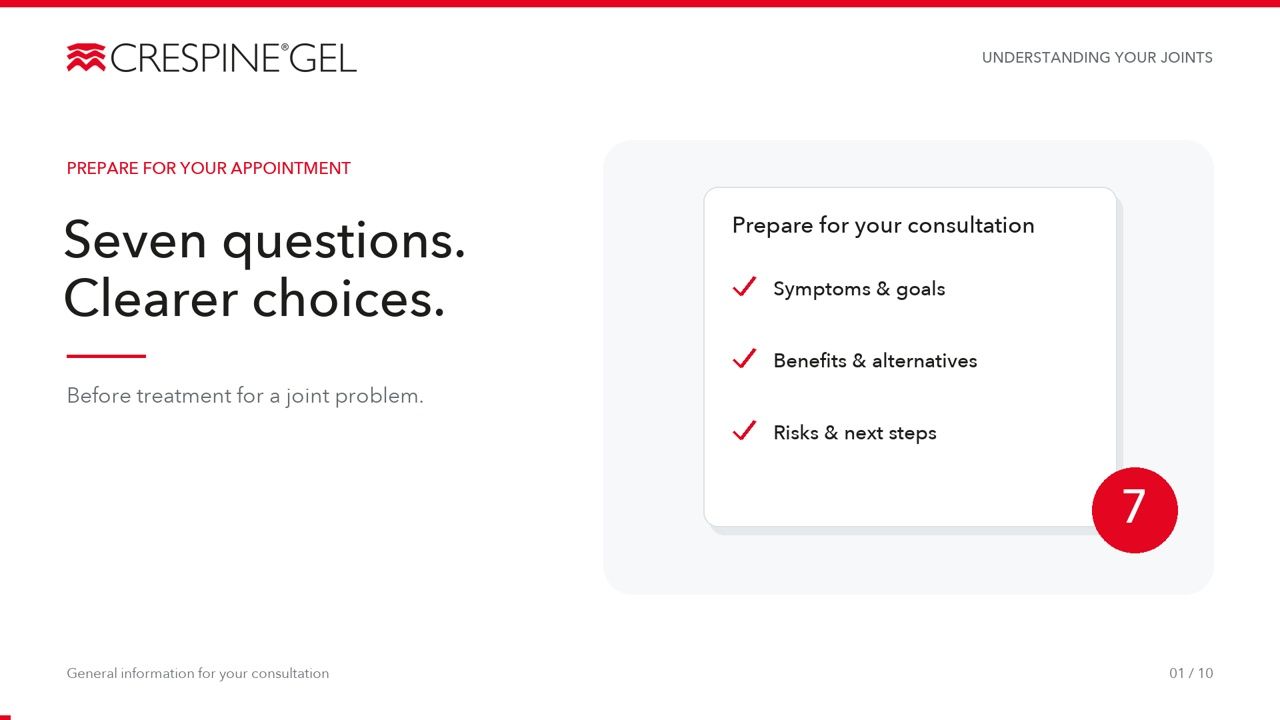
Seven questions. Clearer choices.
When joint treatment is being considered, some questions may go unanswered during the appointment. A little preparation helps you raise your concerns. You could take these seven questions with you. They focus on your symptoms, your goals and a decision that suits your situation.
What is causing my symptoms?
First: what is causing my symptoms? Knee pain can have different causes. Changes on an X-ray do not always explain how severe the symptoms are. Ask which diagnosis is most likely and whether anything else needs investigating.
What would I like to do more easily?
Second: what would I like to do more easily again? Describe exactly what limits you in daily life. This helps you discuss which changes matter to you and which goals are realistic.
What options do I have?
Third: what options do I have? Appropriate movement and strengthening exercises are important parts of treating knee osteoarthritis. If you are overweight, losing weight may help. Medicines and other treatments may also be considered, depending on the situation. Ask which useful measures are already in place and what alternatives there are to the proposed treatment.
What benefit can I expect?
Fourth: what benefit can I expect? Ask about results in people in a similar situation and about the limits of the available data. Ask why the treatment is being considered for you and how likely you are to notice an improvement.
Which risks affect me?
Fifth: which risks affect me? Tell the team about your health conditions, allergies and all the medicines you take. Ask about contraindications and possible side effects. Your healthcare team will assess which risks are particularly relevant to you.
What should I consider afterwards?
Sixth: what should I consider afterwards? Ask the team to explain the procedure, any restrictions and aftercare. Also ask which symptoms you should report and who you can contact. Ideally, get this information in writing.
How will we know if it helps?
Seventh: how will we know if it helps? Agree on a time to review the effect together. Write down beforehand what you hope will improve. Also clarify the expected costs and who will cover them before you decide.
Write it down. Bring it. Ask.
A few notes are often enough for the appointment. When did the symptoms start? What makes them better or worse? Which medicines do you take? And which questions matter most to you? You can keep asking until you understand the options.
Your questions matter.
Crespine Gel. This information does not replace medical advice. Discuss your symptoms and treatment options with your doctor.
Explore next
All videos ↗
Preparing for your appointment
Hyaluronic acid knee injection: What happens at the appointment?
Preparing for a hyaluronic acid injection in the knee? This video explains what to bring, what to discuss with your healthcare team, the treatment appointment, aftercare and getting home.
Watch video
Preparing for your appointment
Repeat hyaluronic acid treatment: What should you discuss first?
Considering another hyaluronic acid treatment in your knee? This video explains which records to bring and which questions to discuss: previous progress, current health, medicines, personal goals, benefits, risks, alternatives and costs. The timing and suitability require an individual medical assessment.
Watch video