
Symptoms & movement
My knee clicks or cracks: Should I be worried?
Understand why symptoms and movement matter more than the sound alone.

Your next step
Prepare for your appointment
Prepare for your appointmentRead the video transcript
What does the sound mean?
Your knee clicks or cracks. Does that mean damage? A sound alone cannot answer that question. Painless clicking is common and can be normal. What matters more is what happens alongside it. Is there pain, swelling or a change in how the knee moves?
What happens alongside it?
You might hear a click when standing up, then move normally afterwards. Or the sound might be new and painful. These are different situations. Pay attention to symptoms and function. How loud the sound is does not, on its own, tell you how your knee is doing.
Different sounds, different causes
Several structures move against each other in and around the knee. This can produce joint sounds. Osteoarthritis can also be associated with grinding or creaking. But a sound alone cannot diagnose osteoarthritis or reliably identify a meniscus injury. More information, and sometimes an examination, is needed.
Describe it without forcing it
When discussing it at an appointment, be specific. When did it start? Which movement brings it on? Is there pain, swelling or a feeling of instability? You do not need to keep moving your knee until it clicks. Describing the everyday situation is often more useful than forcing a demonstration.
When there is no pain
A familiar, painless click with normal movement is usually not, by itself, a reason to avoid all activity. Continue with activities that suit you. If you are unsure, or something changes, ask for an assessment. Making your knee click is not an exercise goal and should not be done deliberately.
When assessment may help
New or recurring painful clicking should be discussed with a healthcare professional. The same applies if the knee repeatedly swells or feels unstable. Mention any accident or unusual activity beforehand. This helps distinguish between different possible causes.
If the knee locks
If you suddenly cannot move your knee properly or put weight on the leg, seek prompt medical advice. Severe pain, or a markedly swollen and hot knee, also needs timely assessment. In these situations, it is the accompanying symptoms that matter, not just the sound.
Look at symptoms and function
Remember three things: pain, swelling and movement. Describe what has changed. A click or crack alone is not a diagnosis. Together, your observations provide a much better basis for deciding whether an examination is needed and what the next step should be.
Make an informed decision
Crespine Gel. This information does not replace medical advice. Discuss your symptoms and treatment options with your healthcare professional.
Explore next
All videos ↗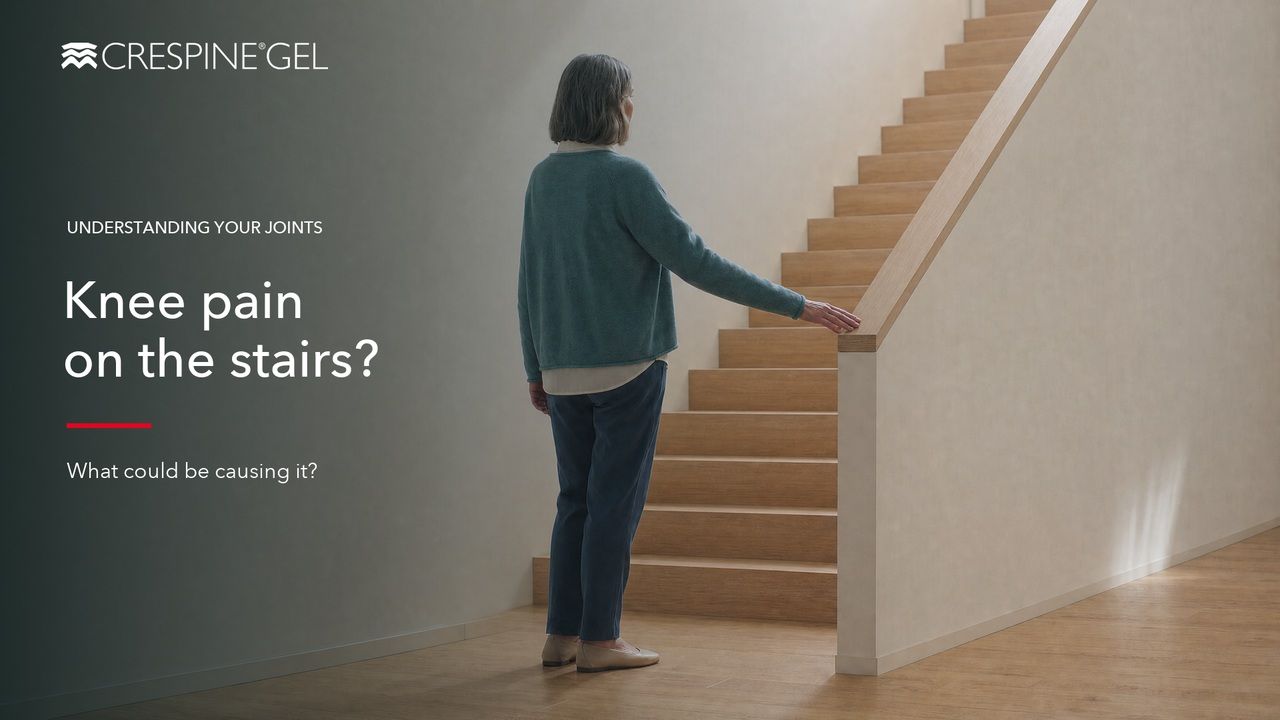
Symptoms & movement
Knee pain on stairs: What could be causing it?
Knee pain when going up or down stairs can have different causes. This video explains why symptoms may become noticeable on stairs, what to describe at your appointment, and which warning signs need prompt medical attention.
Watch video
Symptoms & movement
Knee osteoarthritis: Should I exercise or rest?
When your knee hurts, it is understandable to want to move as little as possible. But appropriate movement is part of treatment for knee osteoarthritis. It can ease pain and improve function. The key is to find a level of activity that suits you and your symptoms.
Watch video