
Symptoms & movement
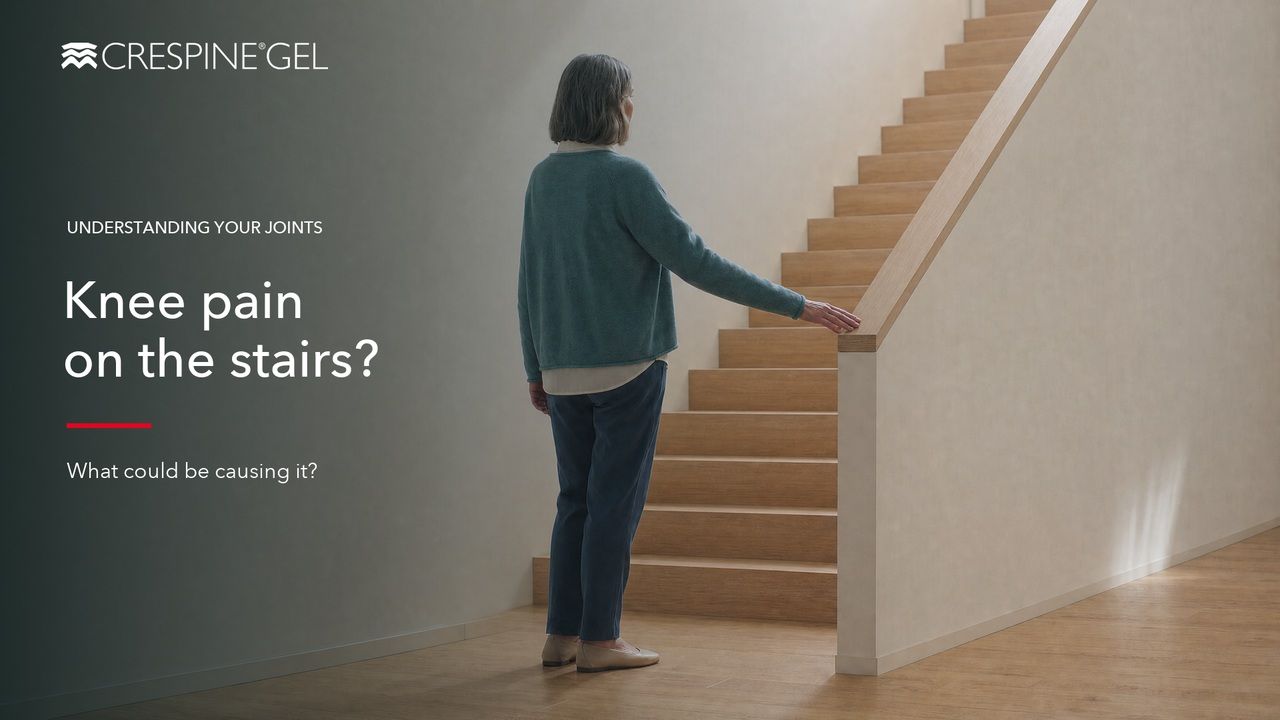
Knee pain on stairs: What could be causing it?
Knee pain when going up or down stairs can have different causes. This video explains why symptoms may become noticeable on stairs, what to describe at your appointment, and which warning signs need prompt medical attention.
Your next step
Prepare for your appointment
Prepare for your appointmentRead the video transcript
Why does your knee hurt?
Walking on level ground may feel fine. But on the stairs, your knee starts to hurt. What could be causing it, and what should you tell your doctor?
Bend. Straighten. Stabilise.
As you climb stairs, your knee repeatedly bends and straightens. Muscles guide the movement, and your kneecap moves along its groove. Pain around the knee can become particularly noticeable during this activity.
Not always osteoarthritis.
Pain on stairs does not automatically mean osteoarthritis. It can come from the area around the kneecap, for example. Osteoarthritis, overuse or an injury may also play a part. This everyday situation alone cannot tell us what is causing the pain.
What do you notice?
A clear description helps. Where exactly does it hurt? When did it start? Is going up or down stairs more difficult? Was there a fall, a twist or an unusual amount of activity? Also notice any swelling or a feeling that your knee is giving way.
Putting the clues together.
Your doctor brings these clues together during the consultation and examination. They may check how your knee moves, how stable it is and where it hurts. Whether further tests are needed depends on what they find.
Find what works for you.
What helps depends on the cause. Your treatment plan may include adjusting your activity and choosing suitable exercises. Ask a professional to show you how to do them. Do not try to push through severe symptoms with a training programme you have chosen yourself.
Take warning signs seriously.
Seek prompt medical assessment for severe pain, a locked knee or an inability to put weight on it. Marked swelling, or a hot, red joint with a fever, are also warning signs. In these situations, do not put off getting medical help.
Where? When? Daily impact?
To prepare for your appointment, start with three notes. Where does it hurt? When does it happen? How does it limit your everyday activities? This helps focus the conversation. The right treatment begins with understanding the cause.
Be ready for your appointment.
Crespine Gel. This information does not replace medical advice. Discuss your symptoms and treatment options with your doctor.
Explore next
All videos ↗
Symptoms & movement
Knee osteoarthritis: Should I exercise or rest?
When your knee hurts, it is understandable to want to move as little as possible. But appropriate movement is part of treatment for knee osteoarthritis. It can ease pain and improve function. The key is to find a level of activity that suits you and your symptoms.
Watch video
Symptoms & movement
Knee pain when standing up: Why do the first steps hurt?
Understand discomfort after rest and prepare three useful observations for your medical appointment.
Watch video