
Understanding treatment
Knee injections: Hyaluronic acid, cortisone and PRP explained
Different injections are offered for knee osteoarthritis. But the word injection can refer to very different preparations. We explain three approaches: hyaluronic acid, cortisone and a preparation made from your own blood. Understanding the differences helps you ask more specific questions and discuss treatment with your doctor.
Your next step
Prepare for your appointment
Prepare for your appointmentRead the video transcript
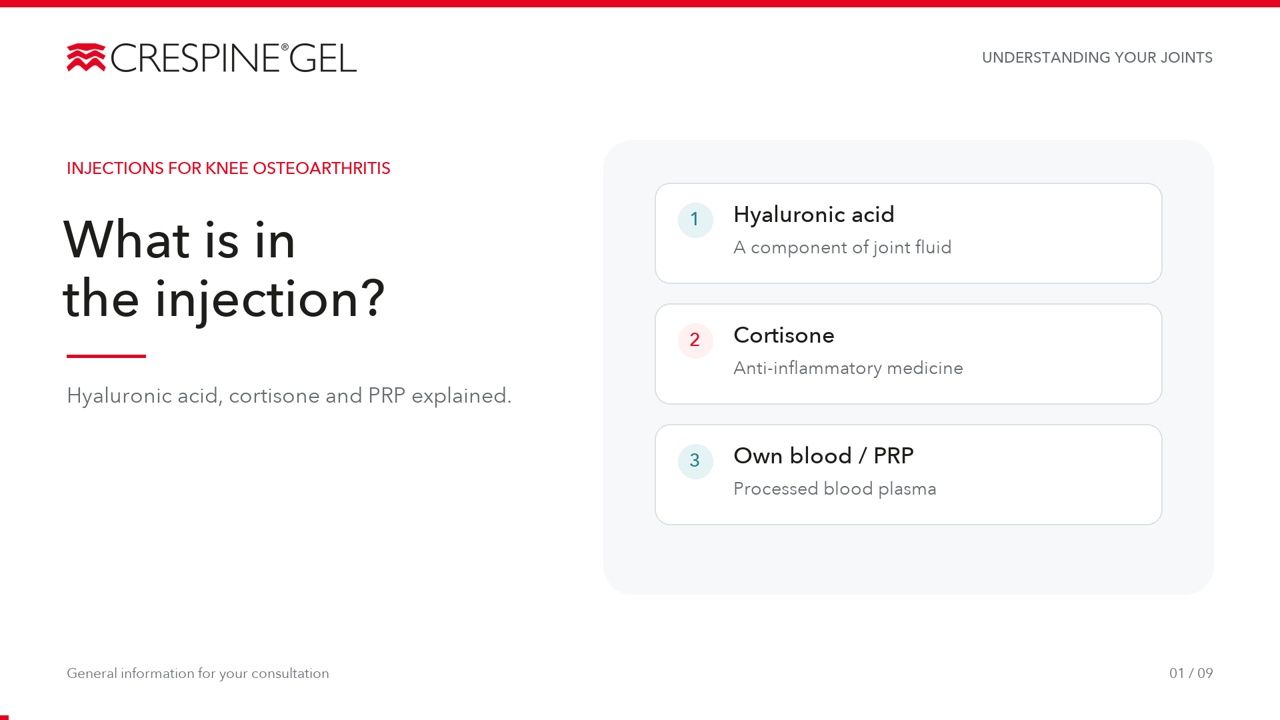
What is in the injection?
Different injections are offered for knee osteoarthritis. But the word injection can refer to very different preparations. We explain three approaches: hyaluronic acid, cortisone and a preparation made from your own blood. Understanding the differences helps you ask more specific questions and discuss treatment with your doctor.
A component of joint fluid
Hyaluronic acid occurs naturally in synovial fluid and contributes to its lubricating and elastic properties. A hyaluronic acid injection introduces a preparation into the joint space. Products differ in molecular size, cross-linking and concentration, among other things. A material property alone cannot predict how your symptoms will develop.
An anti-inflammatory approach
Here, cortisone refers to an anti-inflammatory medicine from the corticosteroid group. It may be considered, for example, during a flare-up with inflammation. Its purpose is to reduce the inflammatory response. Whether treatment is suitable and whether it should be repeated are assessed individually.
What does P R P mean?
For this treatment, blood is first taken and processed. Often, the preparation is platelet-rich plasma, or P R P. It contains a higher concentration of platelets, which can release various signalling substances. Preparation methods and composition are not the same in every procedure. Coming from your own body does not automatically mean risk-free.
One component or several?
Some products combine hyaluronic acid with a corticosteroid. This is different from a local anaesthetic, which temporarily numbs pain. Ask for the exact name of the preparation and its components. The term joint injection does not, on its own, fully describe the treatment.
What is suitable for me?
The choice depends on your diagnosis, current symptoms and previous treatments. Other health conditions, medicines and personal goals also matter. An injection may be one part of a treatment plan. Appropriate movement and muscle training remain important parts of managing knee osteoarthritis.
What should the clinic know?
Every joint injection is a medical procedure. Pain or swelling may occur, and an infection is also possible. Careful discussion beforehand and hygienic technique are therefore important. Mention allergies, current infections and your medicines. If you have diabetes, discuss a possible temporary rise in blood sugar before a cortisone injection.
Product. Goal. Risks. Aftercare.
Four questions can help at your appointment. What exactly will be injected? What is the aim? Which risks and alternatives matter to me? And what should I consider afterwards? Ask the team to explain the planned procedure and possible costs, too. This turns a general proposal into a personal treatment plan you can understand.
Ask questions.
Crespine Gel. This information does not replace medical advice. Discuss your symptoms and treatment options with your doctor.
Explore next
All videos ↗
Understanding treatment
Crespine Gel: Hyaluronic acid in the knee, explained
Painful joints can raise many questions. What happens inside a joint? What is hyaluronic acid? And what does treatment with Crespine Gel involve? Let us take a closer look.
Watch video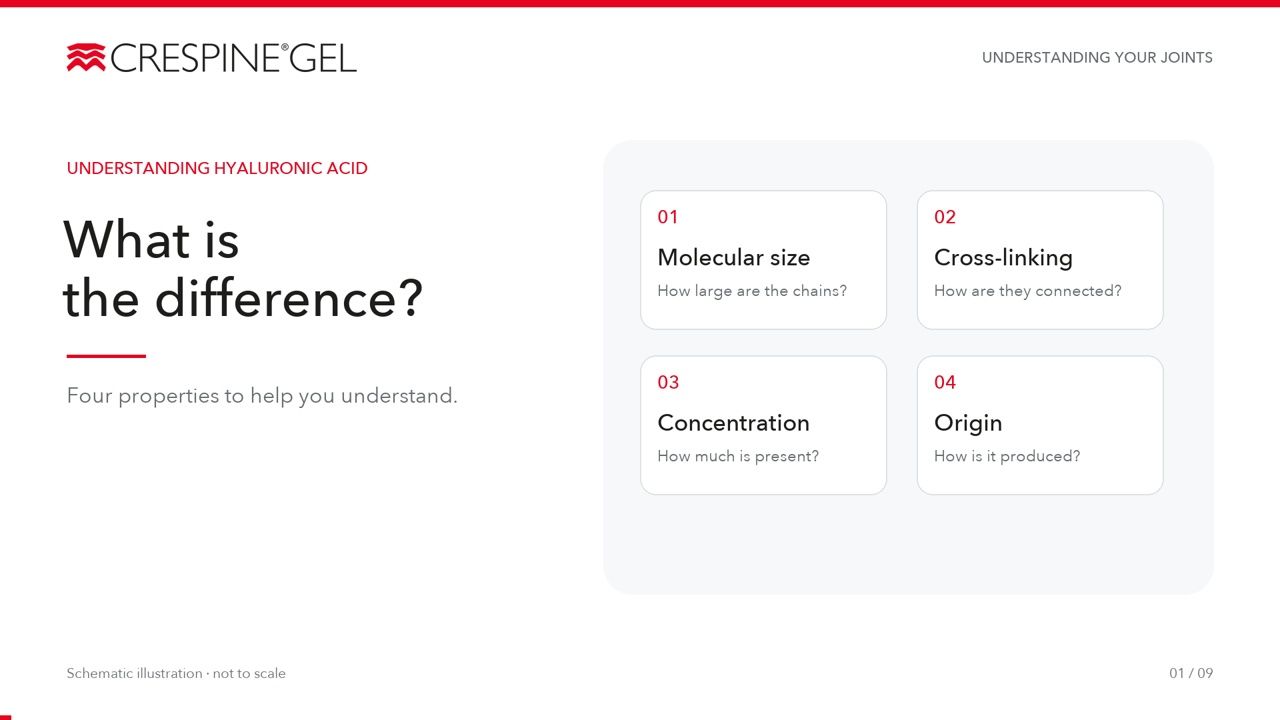
Understanding treatment
Hyaluronic acid: Cross-linked or high molecular weight?
High molecular weight, cross-linked, or non-animal origin. When you read about hyaluronic acid, you may come across many terms. They describe different properties. This video explains four of them: molecular size, cross-linking, concentration and origin.
Watch video