
Understanding treatment
Crespine Gel: Hyaluronic acid in the knee, explained
Painful joints can raise many questions. What happens inside a joint? What is hyaluronic acid? And what does treatment with Crespine Gel involve? Let us take a closer look.

Your next step
Prepare for your appointment
Prepare for your appointmentRead the video transcript
Hyaluronic acid in the joint
Painful joints can raise many questions. What happens inside a joint? What is hyaluronic acid? And what does treatment with Crespine Gel involve? Let us take a closer look.
A look inside the knee
In the knee, the thigh bone meets the shin bone. Cartilage covers the joint surfaces. The joint also contains synovial fluid. This helps reduce friction during movement. Hyaluronic acid is a natural component of this fluid.
Long chains. Distinct properties.
Hyaluronic acid consists of long molecular chains and can bind water. It contributes to the elastic and lubricating properties of synovial fluid. In this way, the fluid supports movement within the joint.
More than cartilage alone
In osteoarthritis, cartilage and other tissues within the joint change. Symptoms can have different causes. That is why a medical assessment comes before treatment.
Cross-linked hyaluronic acid
Crespine Gel is a gel implant made from cross-linked hyaluronic acid of non-animal origin. Cross-linked means that the molecular chains are joined together. Another product variant is Crespine Gel Plus. It also contains prilocaine, a local anaesthetic.
Supporting joint function
Crespine Gel supplements the synovial fluid that has changed in osteoarthritis. The aim of treatment is to relieve pain and improve joint function. Crespine Gel is intended for a single injection.
A treatment by a healthcare professional
Crespine Gel is injected into the joint space by a qualified healthcare professional. Whether it is suitable is assessed individually. This includes the diagnosis, contraindications and other treatment options.
Benefits. Risks. Alternatives.
Ask your doctor about the expected benefits, risks and alternatives. Possible risks include pain, swelling and a joint infection.
Ask questions. Decide together.
Crespine Gel. This information does not replace medical advice. Discuss your symptoms and treatment options with your doctor.
Explore next
All videos ↗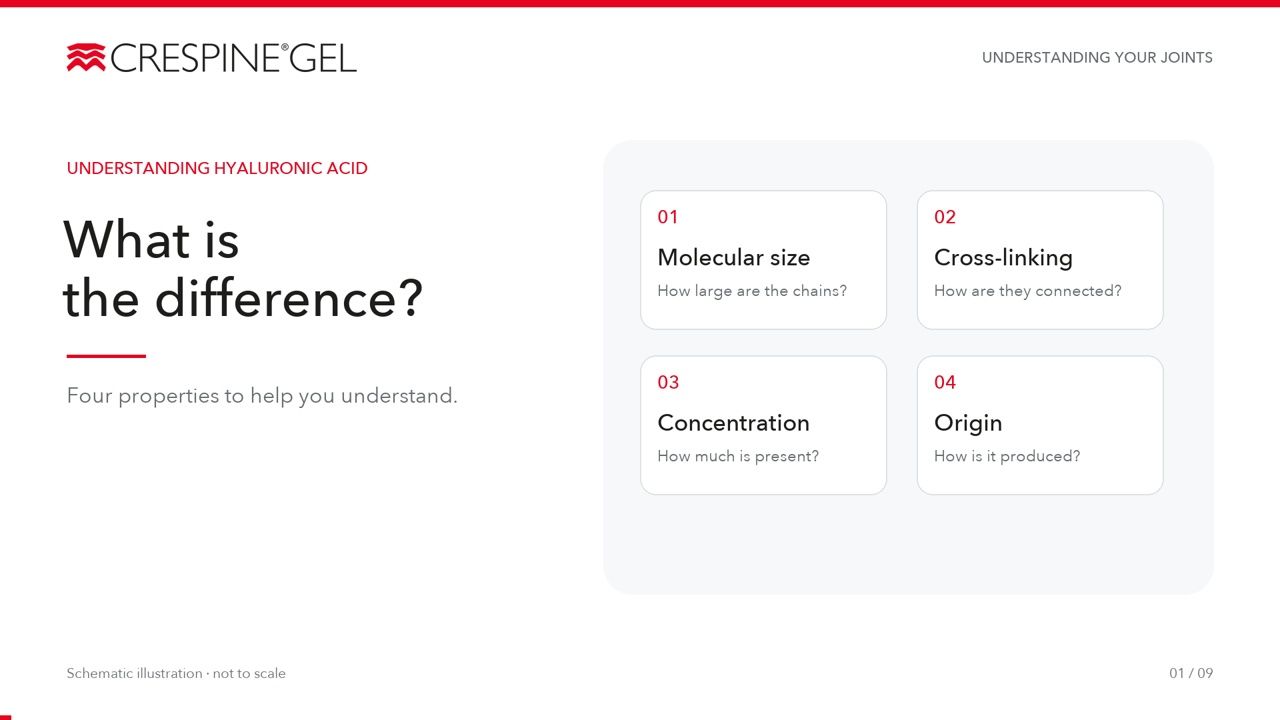
Understanding treatment
Hyaluronic acid: Cross-linked or high molecular weight?
High molecular weight, cross-linked, or non-animal origin. When you read about hyaluronic acid, you may come across many terms. They describe different properties. This video explains four of them: molecular size, cross-linking, concentration and origin.
Watch video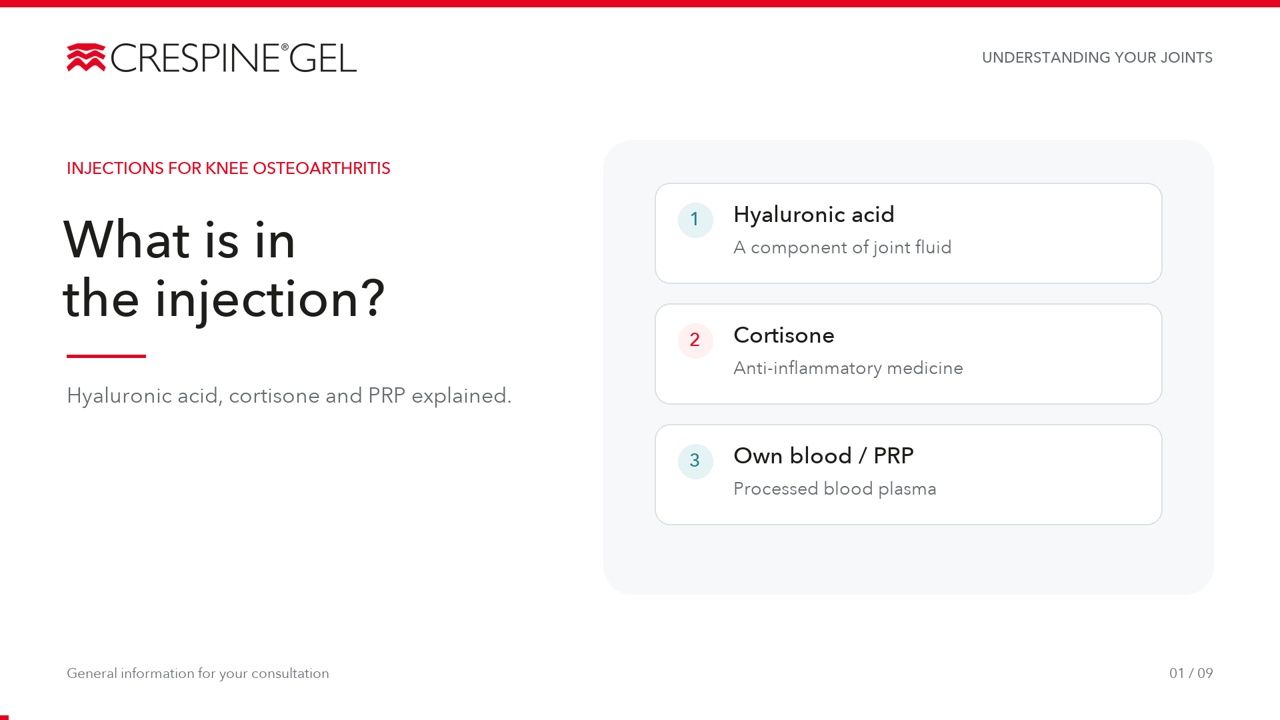
Understanding treatment
Knee injections: Hyaluronic acid, cortisone and PRP explained
Different injections are offered for knee osteoarthritis. But the word injection can refer to very different preparations. We explain three approaches: hyaluronic acid, cortisone and a preparation made from your own blood. Understanding the differences helps you ask more specific questions and discuss treatment with your doctor.
Watch video