
Understanding treatment
Hyaluronic acid: Cross-linked or high molecular weight?
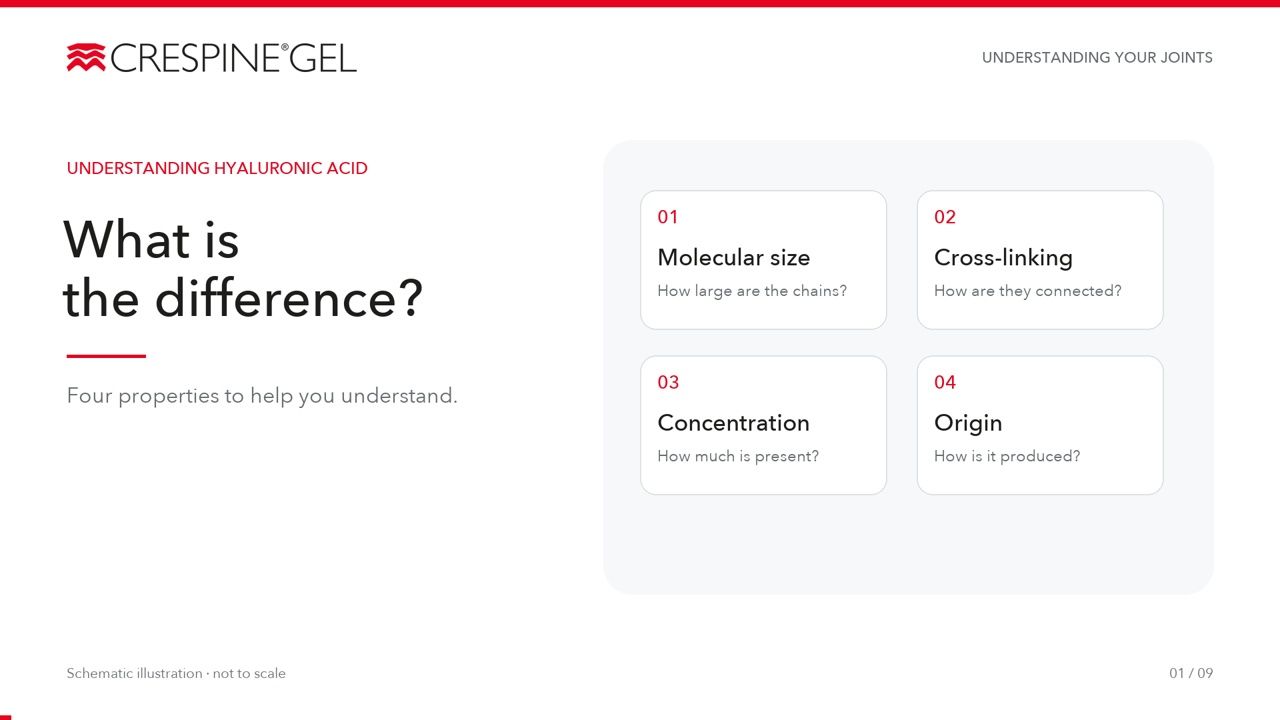
High molecular weight, cross-linked, or non-animal origin. When you read about hyaluronic acid, you may come across many terms. They describe different properties. This video explains four of them: molecular size, cross-linking, concentration and origin.
Your next step
Prepare for your appointment
Prepare for your appointmentRead the video transcript
What is the difference?
High molecular weight, cross-linked, or non-animal origin. When you read about hyaluronic acid, you may come across many terms. They describe different properties. This video explains four of them: molecular size, cross-linking, concentration and origin.
Longer and shorter chains
Hyaluronic acid consists of long chains of repeating building blocks. Put simply, molecular weight describes how large these chains are. High molecular weight means the chains are relatively large. Low molecular weight means they are smaller. So this term refers to the size of individual molecules.
Connections between chains
The second question is whether there are additional connections between the chains. Non-cross-linked hyaluronic acid does not have these extra connections. In cross-linked hyaluronic acid, connections are added between the chains. This can change the properties of the material. Cross-linked is therefore not another word for high molecular weight.
How much is in a given volume?
Another measurement is concentration. It describes how much hyaluronic acid is present in a given amount of fluid, such as one millilitre. Two products can have the same concentration but still differ in molecular size or cross-linking.
How is it produced?
The source is also often mentioned. Hyaluronic acid can be produced by fermentation using microorganisms. Other products use materials of animal origin. This information describes production. On its own, it does not tell you which product is suitable for a particular person.
Consider each property separately
The four measurements complement each other. A high concentration does not automatically mean more cross-linking. And a particular material property does not, on its own, prove a greater benefit for symptoms. Suitable clinical studies are needed to assess that.
What can you expect?
Treatment cannot be chosen from material terms alone. Discuss the expected benefits, possible risks and alternatives with your doctor.
Crespine Gel
Crespine Gel is a gel implant made from cross-linked hyaluronic acid of non-animal origin. Cross-linked means that the molecular chains are joined together. Another product variant is Crespine Gel Plus. It also contains prilocaine, a local anaesthetic.
Ask questions.
Crespine Gel. This information does not replace medical advice. Discuss your symptoms and treatment options with your doctor.
Explore next
All videos ↗
Understanding treatment
Crespine Gel: Hyaluronic acid in the knee, explained
Painful joints can raise many questions. What happens inside a joint? What is hyaluronic acid? And what does treatment with Crespine Gel involve? Let us take a closer look.
Watch video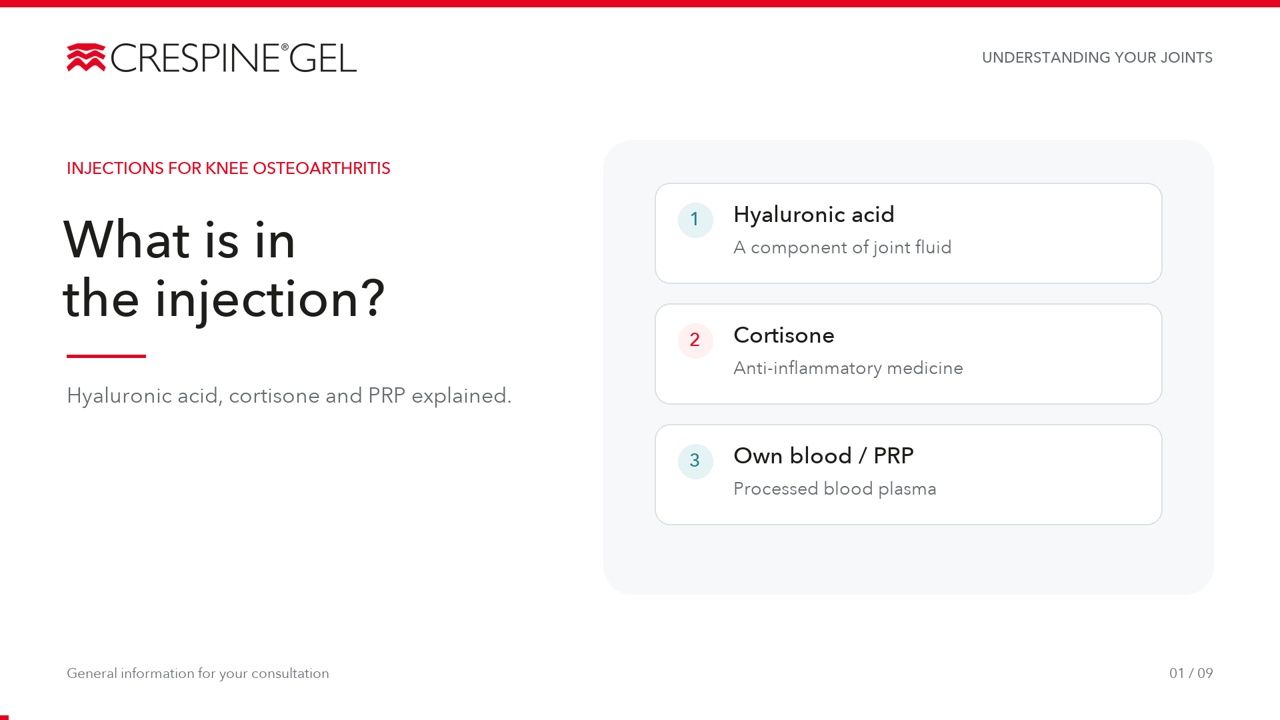
Understanding treatment
Knee injections: Hyaluronic acid, cortisone and PRP explained
Different injections are offered for knee osteoarthritis. But the word injection can refer to very different preparations. We explain three approaches: hyaluronic acid, cortisone and a preparation made from your own blood. Understanding the differences helps you ask more specific questions and discuss treatment with your doctor.
Watch video