
Symptoms & movement
Knee pain when standing up: Why do the first steps hurt?
Understand discomfort after rest and prepare three useful observations for your medical appointment.

Your next step
Prepare for your appointment
Prepare for your appointmentRead the video transcript
The first steps
Why do the first few steps hurt? You get up from the sofa, and your knee feels stiff. After a little while, moving may feel easier. This is a pattern you can describe. It does not, on its own, tell you the cause.
After a period of rest
With knee osteoarthritis, pain can occur when you begin moving. Stiffness after sitting or first thing in the morning can also be part of the picture. But these symptoms do not prove that you have osteoarthritis. How they started, and what the examination shows, both matter.
Where does it hurt?
When you stand up, your knee joint and thigh muscles work together. Pain at the front of the knee can also involve the area around the kneecap. Other causes are possible. At your appointment, show exactly where it hurts, rather than simply saying that your knee is giving you trouble.
Three observations
Three questions can help you prepare. When does the pain begin? Where do you feel it? And how does it change during those first steps? Also describe how long the stiffness lasts. A brief note in your calendar is enough. Do not deliberately repeat a painful movement just to record it.
Making everyday tasks easier
If getting up is difficult, choose a stable seat that you can rise from safely. Use the armrests if available, and take your time. A physiotherapist can help you decide which movements and exercises suit you. A suitable plan takes account of both your strength and your symptoms.
When it keeps happening
Symptoms that keep returning, persist or get worse should be assessed by a healthcare professional. The same applies if they significantly limit everyday activities. Mention any injury, swelling or feeling that the knee is unstable. These details help guide the choice of examination.
When to seek prompt help
Severe pain, marked swelling or a locked knee need prompt medical assessment. This is especially important if you cannot put weight on the leg, or your knee is hot and red and you feel unwell. Do not dismiss these changes as ordinary stiffness when you start moving.
When. Where. How long.
Remember: when does it begin, where does it hurt, and how long does it last? These three observations turn “my knee is bad in the morning” into a useful description. Together with your healthcare professional, you can then decide on the next appropriate step.
Make an informed decision
Crespine Gel. This information does not replace medical advice. Discuss your symptoms and treatment options with your healthcare professional.
Explore next
All videos ↗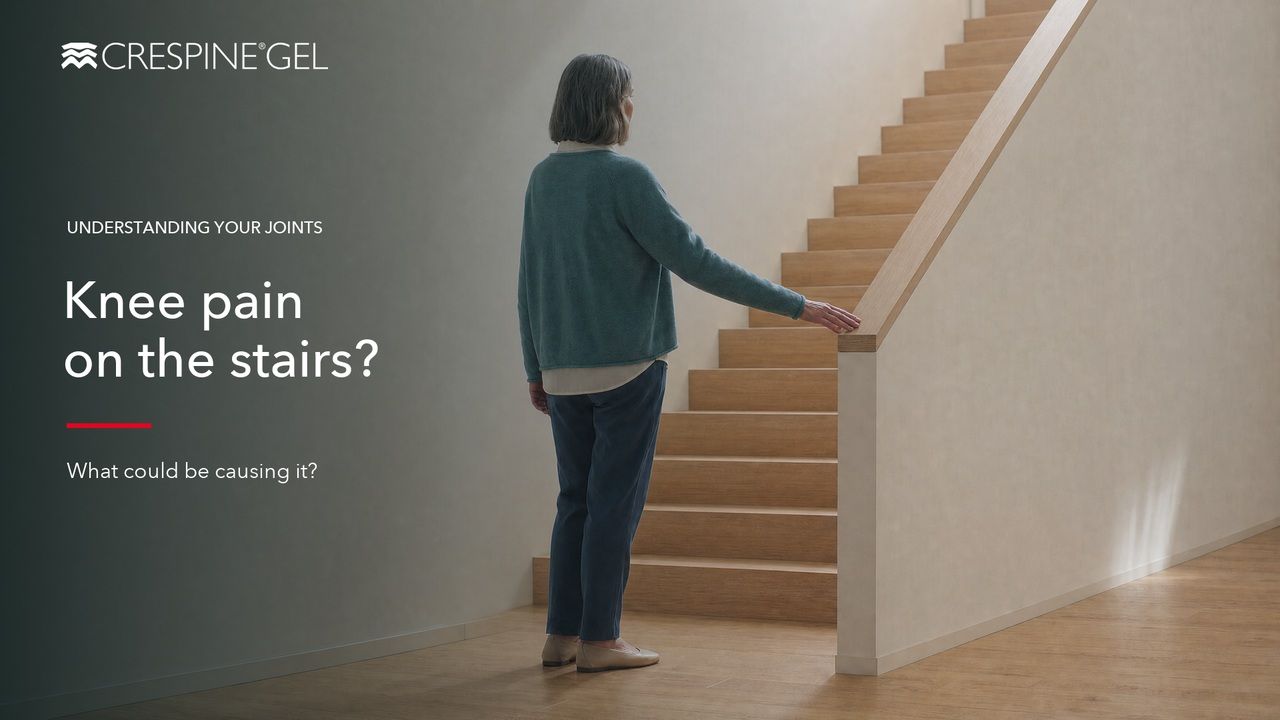
Symptoms & movement
Knee pain on stairs: What could be causing it?
Knee pain when going up or down stairs can have different causes. This video explains why symptoms may become noticeable on stairs, what to describe at your appointment, and which warning signs need prompt medical attention.
Watch video
Symptoms & movement
Knee osteoarthritis: Should I exercise or rest?
When your knee hurts, it is understandable to want to move as little as possible. But appropriate movement is part of treatment for knee osteoarthritis. It can ease pain and improve function. The key is to find a level of activity that suits you and your symptoms.
Watch video